
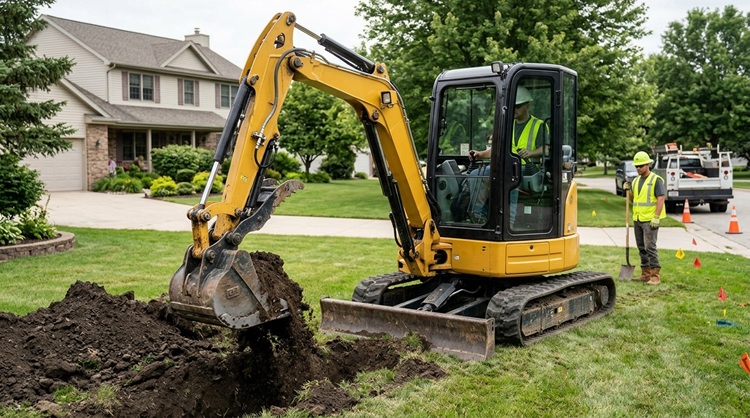

The first questions when buying a mini excavator are often about price, operating weight and how many buckets come with the deal. Those details matter. But once the machine arrives, the bigger concerns tend to be more practical: will it get into the sites you work on, can you move it between jobs, and who do you call when you need a part?
A useful buying process starts with the work, not the brochure. Before settling on a model, take a little time to describe the jobs, access restrictions and attachments the machine will need to handle. That gives you a better basis for comparing quotes—and makes it easier for a supplier to recommend an appropriate configuration.
Table of Contents
Start with the jobs you do most often
Residential landscaping, drainage work, fencing projects and rural property maintenance can place quite different demands on an excavator. Two buyers with the same budget may have good reasons to choose different machines.
Think about your recent jobs. How wide were the entrances? Where could the machine work? Was there room to turn and stockpile material? How often did you need to move between sites?
These details are more useful than simply telling a dealer you want something around two tonnes.
It is also worth separating regular work from the occasional larger project. Buying extra capacity for a job you might take on one day can add transport and storage complications to every ordinary week. Buying too small to suit one unusually narrow entrance can create a different problem.
You can use Achilles Machinery’s mini excavator range to build an initial shortlist, then discuss two or three candidates against your actual workload.
Measure more than the gate
A machine that fits through an entrance may still be awkward to use once it is inside.
Check the route through the property as well as the narrowest opening. Corners, overhead structures, fences and established trees can all affect access. Then consider the working area: the excavator needs room for its work equipment and attachments, while the job also needs somewhere for excavated material to go.
For models with retractable tracks, ask which configuration the published width describes and what the manufacturer requires for operation. A transport or access dimension should not be treated as the full working-space requirement.
Likewise, a zero-tail-swing description does not remove the need to check clearances around the rest of the machine.
Send the supplier photographs and measurements before visiting. “Will it fit through this measured opening and work in this area?” is a much better question than “Will it fit in a normal backyard?”
Make the specifications relevant to your work
Maximum digging depth, reach and bucket capacity are useful comparison points, but none tells the whole story.
A maximum depth figure does not establish suitability for every trenching job. The machine’s position, attachment and site conditions still matter. A larger bucket is not automatically the better choice for every material or task, either.
Ask the supplier to explain why the proposed configuration suits your requirements. Which points can be confirmed from the manufacturer’s information? Which need further investigation? Would the recommendation change with another attachment?
Where lifting forms part of the intended work, do not use operating weight or digging performance as a substitute for the relevant lifting information. Have the proposed arrangement checked against the applicable manufacturer’s data and obtain suitable professional advice where needed.
The aim is not to memorise every specification. It is to understand which ones affect your purchase.
Discuss attachments before choosing the machine
An auger, breaker or existing bucket can influence the configuration you need, so attachments belong in the first conversation—not the last.
If you already own equipment, provide its make, model and available technical information. Saying it previously fitted another excavator of a similar weight is not enough to confirm compatibility.
The proposed combination may need checks covering mounting dimensions, the coupler, hydraulic flow and pressure, and other connection requirements. Being able to physically connect an attachment does not establish that the whole arrangement is suitable.
For package deals, get the supplied attachments identified in writing. Confirm which are included, which cost extra and when they will be available.
A useful package contains equipment you can actually use. A long list of extras is less valuable if the important attachment is missing or its compatibility remains uncertain.
Put competing quotes on the same basis
Headline prices can describe quite different offers.
One may cover the base machine only. Another may include selected attachments or delivery. GST treatment may also differ between advertisements. Until those details are clear, the cheaper number may not represent the cheaper purchase.
Ask for a written quote showing the exact machine configuration, included equipment, GST, freight and any separate charges. Confirm the delivery location, unloading arrangements and expected timing.
Warranty and service information should be available before payment, rather than left for the handover.
Keep some budget beyond the purchase itself. Maintenance, insurance, transport, storage and replacement wear parts all need consideration. If finance is involved, review the terms separately instead of judging affordability from an advertised weekly repayment alone.
An itemised quote makes these conversations easier. It also gives both parties something clear to refer to if questions arise later.
Sort out transport before paying a deposit
If you intend to transport the excavator yourself, check the complete arrangement before committing to the machine.
The relevant load is not necessarily the single weight shown in an advertisement. The actual configuration, attachments and other equipment travelling with it need to be considered.
Have an appropriate transport provider or qualified adviser check the proposed vehicle, trailer and towing arrangement. The word “mini” is not confirmation that your existing ute and trailer are suitable.
Supplier delivery needs planning too. Explain any narrow approach roads, restricted access or limited unloading space. Confirm who is responsible for unloading and what the site must provide.
These are much easier discussions to have before the delivery truck arrives.
Treat condition and support as part of the purchase
There is no universal answer to the new-versus-used question.
With a new machine, compare the supplied configuration, delivery arrangements and written support conditions. With a used machine, investigate its condition, maintenance history and likely repair requirements. Recorded hours are useful, but they cannot establish condition on their own.
An independent inspection may be worthwhile for a used purchase. Include possible repair and downtime costs in the comparison rather than spending the entire budget on the asking price.
For either option, make after-sales questions specific. Who handles the first service? How are filters and wear parts ordered? Who receives the first call if something goes wrong? Must the machine return to a workshop, and how are associated costs handled?
“Local support” becomes meaningful when you understand the process behind it.
Visit with questions, not just expectations
A demonstration can help you assess the operator position, visibility, controls and proposed equipment. First, confirm whether the demonstration machine matches the one being quoted.
If it does not, ask the supplier to explain the differences. Do not assume another configuration will behave identically.
A demonstration also has limits. It cannot establish suitability for every material, ground condition or site. Important requirements should be supported by relevant information, not just a favourable impression from a short visit.
Before making your decision, check that the main uncertainties have been resolved: the configuration is clear, the attachments have been checked, the costs are itemised and the delivery and support arrangements are understood.
When you are ready, gather your typical jobs, site measurements, attachment requirements and delivery postcode, then contact Achilles Machinery for a written quote.
That gives the conversation a practical starting point. Instead of comparing attractive headline prices, you can compare what each proposed machine and package would mean for your working week.